
Summary
What are CD4 cells?
CD4 cells (also known as a CD4 T lymphocytes or T-helper cells) play an important role in coordinating the body's immune response. Rather than directly fighting infections themselves, they are the ‘helper’ cells of the immune system.
They guide other immune cells to recognise and fight infections and abnormal cells, including cancer cells. CD4 cells are made in the spleen, lymph nodes and thymus gland, and they circulate throughout the body in the bloodstream.
Why get tested?
HIV (Human Immunodeficiency Virus)
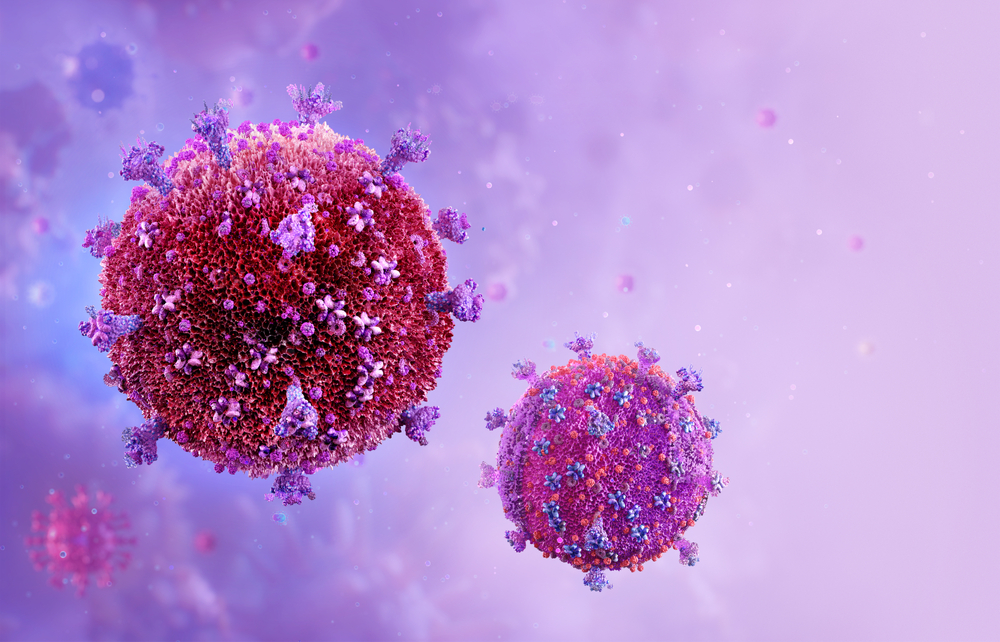
When a virus such as HIV invades the body, it begins a process to enter cells and make copies of itself. Viruses are composed of a small piece of genetic information (either DNA or RNA) inside a protective shell. They cannot replicate their genetic material on their own — they must infect a host cell to be able to do so.
HIV targets CD4 cells and enters them. Once inside, it makes new copies of itself. When infected CD4 cells multiply, more HIV is produced, allowing the infection to spread throughout the body. Gradually, HIV destroys CD4 cells and the immune system becomes weakened.
Over time, common viruses and bacteria that are not dangerous to healthy people can cause repeated infections and the immune system becomes less able to stop certain cancers from developing.
HIV antiretroviral therapy (ART) is the treatment used to control HIV infection. It is a highly effective combination of medicines taken together that stop the virus from making new copies of itself inside the body.
ART does not cure HIV, but it can reduce the amount of virus in the blood (the viral load) to very low or undetectable levels. This helps protect the immune system, allows CD4 cells to recover, and greatly reduces the risk of illness and transmission to other people.
If you have HIV and are not on ART, your CD4 count will fall over time. The lower the CD4 cell count, the greater the damage to the immune system and the greater the risk of illness. When you take ART, your CD4 count should gradually increase.
The CD4 cell count is used together with the HIV viral load test. This test measures the amount of HIV in a sample of your blood. ‘Viral load’ means the number of HIV particles or copies of the virus present in the blood. Knowing your viral load is important because it shows what the virus is doing at the present time. For example, a high viral load means HIV is actively reproducing.
The two tests are ordered when someone is first diagnosed with HIV, and the results are used as a baseline measurement so that future test results can be compared. Both tests will be repeated regularly to monitor progress after starting anti-HIV therapy.
Testing immune function (non-HIV)
Although CD4 testing is most associated with HIV monitoring, it is also used to investigate and monitor other health conditions where the immune system may be weakened. This includes assessing someone with an inherited or acquired disorder that affects T cells, monitoring someone following organ transplantation or when treating cancers such as some lymphomas and leukaemia.
However, other than in HIV care, CD4 testing is used much less frequently. In many of these situations, broader tests of immune function, such as a full blood count (FBC), lymphocytes, immunoglobulin levels or specialised immune function tests are more likely to be used.

Your results
Any single CD4 count result may differ from the last one even though your health status has not changed. You should not place too much importance on any one result. What is more important is the pattern of CD4 counts over time. The CD4 count tends to be lower in the morning and higher in the evening. Acute illnesses, such as pneumonia, influenza or herpes simplex virus infection, can cause the CD4 count to decline temporarily. Cancer chemotherapy can dramatically lower the CD4 count. The CD4 count does not always reflect how someone with HIV disease feels and functions. For example, some people with higher counts are ill and have frequent complications, and some people with lower CD4 counts have few medical complications and function wellCD4 count results and possible indications CD4 count results are usually interpreted together with other information, such as HIV viral load, symptoms, medical history and the results of other blood tests. Result What this may mean Normal The immune system is functioning normally. However, a normal CD4 count does not rule out HIV infection. Mildly reduced This may be seen in early HIV infection, after a recent illness, with some medications or in other conditions that affect the immune system. Moderately reduced This may indicate significant weakening of the immune system and can occur with untreated HIV, some cancers, immune disorders or immunosuppressive treatment. Idiopathic CD4 lymphocytopenia is a rare condition in which people have persistently low CD4 counts for no known reason, without HIV infection. Very low Very low CD4 count (less than 200 cells/µL) indicates severe immune deficiency and an increased risk of opportunistic infections. In a person with HIV, this is one of the criteria used to define advanced HIV disease (AIDS). Rising CD4 count An increasing CD4 count over time usually suggests that the immune system is recovering, for example after starting effective HIV treatment. Falling CD4 count A decreasing CD4 count over time may indicate worsening immune function, progression of HIV infection, treatment failure or another condition affecting the immune system.
Reference intervals
Your results will be compared to reference intervals (sometimes called a normal range).
Reference intervals are the range of results expected in healthy people.
If your results are flagged as high or low this does not necessarily mean that anything is wrong. It depends on your personal situation.
Reference intervals for the CD4 count vary between labs so you will need to go through your results with your doctor. The reference intervals given here are used by many but not all laboratories.
| Commonly used reference intervals for CD4 count | |
| CD4 T Lymphocytes (Absolute Count) | 500–1,500 cells/µL |
| CD4 Percentage | 30–60% |
| CD8 T Lymphocytes (Absolute Count) | 200–900 cells/µL |
| CD8 Percentage | 15–40% |
| CD4/CD8 Ratio | 0.8–3.5 |
For more on lymphocytes see White Cell Count and Full Blood Count (FBC) | |
Common terms you may see on your HIV CD4 count report
Questions to ask your doctor
The choice of tests your doctor makes will be based on your medical history and symptoms. It is important that you tell them everything you think might help.
You play a central role in making sure your test results are accurate. Do everything you can to make sure the information you provide is correct and follow instructions closely.
Talk to your doctor about any medications you are taking. Find out if you need to fast or stop any particular foods or supplements. These may affect your results. Ask:
More information
Pathology and diagnostic imaging reports can be added to your My Health Record. You and your healthcare provider can now access your results whenever and wherever needed.
Get further trustworthy health information and advice from healthdirect.
What is Pathology Tests Explained?
Pathology Tests Explained (PTEx) is a not-for profit group managed by a consortium of Australasian medical and scientific organisations.
With up-to-date, evidence-based information about pathology tests it is a leading trusted source for consumers.
Information is prepared and reviewed by practising pathologists and scientists and is entirely free of any commercial influence.