
Summary
What are HLAs?
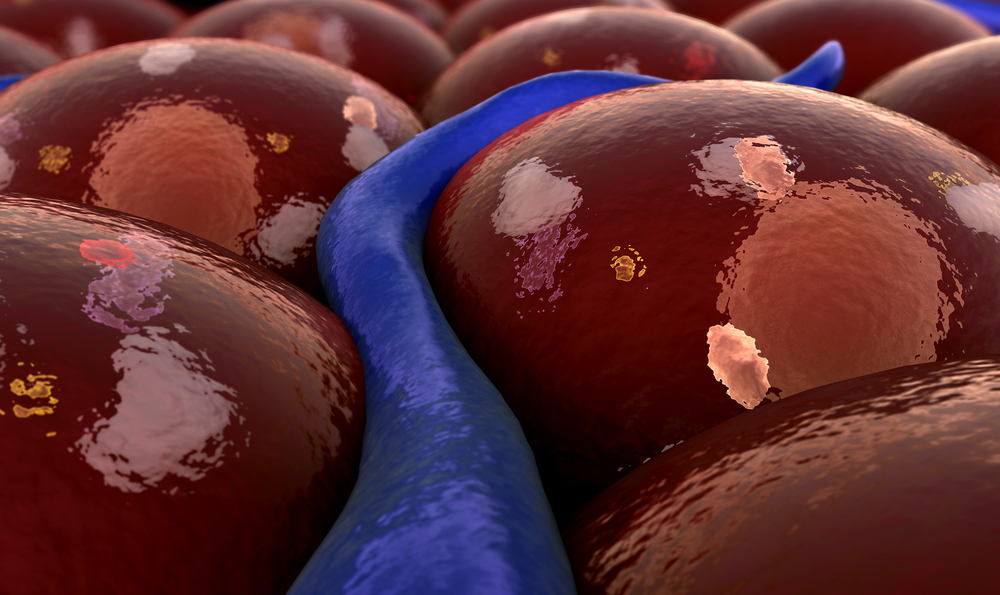
Human leukocyte antigens (HLAs) are proteins on the surface of most of the cells in your body. They help your immune system distinguish your own cells from things such as viruses and bacteria that do not belong in your body.
They work with immune cells called T cells, a type of white blood cell. HLA molecules display small pieces of proteins to T cells, helping them recognise infections and other threats. When T cells recognise a potential threat, they respond by destroying the cell or by helping other immune cells fight it.
How HLAs work
Your cells are constantly making, using and breaking down proteins – your body’s building blocks. This is a normal part of keeping your body functioning.
When proteins are broken down, they make small fragments called peptides. HLAs bind to some of these peptides and carry them to the cell surface, where they are displayed to T cells.
T cells examine the fragments displayed by HLA molecules. Normally, they recognise your body's own protein fragments as harmless and do not attack the cell. However, they can respond to foreign fragments, such as those from a virus.


How you inherit an HLA type
HLA proteins are controlled by a group of genes called HLA genes. HLA genes are located close together on your DNA and because of this, they are usually inherited as a group called an HLA haplotype.
You inherit one HLA haplotype from your mother and one from your father. Together, these determine your HLA type.
HLA genes have many different variations which means HLA types can differ considerably between people. For more on HLA types, HLA antibodies and inheriting HLA genes see HLA testing.
HLA types and autoimmune conditions
Some inherited HLA types are known to increase the risk of developing certain autoimmune conditions. Certain HLAs have structural shapes that present normal body proteins to the immune system as if they were foreign threats. These can activate T cells that mistakenly attack healthy tissues, causing inflammation and damage.
However, having a high-risk type does not necessarily mean you will definitely have an autoimmune condition. Many people with these HLA types never develop the condition, while some people without them do.
This means that while HLA testing can help support a diagnosis when your symptoms and other findings suggest the condition, it can only provide supporting evidence.
A positive result cannot confirm a diagnosis, and a negative result does not usually rule it out. Your HLA type must be considered together with your symptoms, medical history and other test results.
The HLA system includes more than 220 genes categorised as class I or class II. Having a wide variety of HLA genes allows the immune system to respond to a range of foreign substances. There are also many different versions of each HLA gene.
Different versions of a gene are called alleles. Scientists have identified hundreds of alleles, each of which is assigned a specific number. For example, HLA-B27 and HLA-DRB104:01 are HLA alleles.
HLA-B27
HLA-B27 is an HLA type that is found in an estimated 5-10 per cent of the Australian population. It has been associated with several autoimmune disorders. The most common of these is ankylosing spondylitis.
About 90 per cent of people with ankylosing spondylitis have HLA-B27. Other disorders that have an association with HLA-B27 include:
HLA-DQ2 and HLA-DQ8
Coeliac disease
HLA-DQ2.5 and HLA-DQ8 are relatively common haplotypes and found in about 30 – 40 per cent of the general population, but only about three per cent of people who carry them develop coeliac disease. However, most people with coeliac disease will have one or both HLA types.
Narcolepsy type 1
Narcolepsy type 1 is a sleep disorder in which the immune system is thought to mistakenly attack brain cells that help control sleep and wakefulness. Most people with the narcolepsy type 1 have the haplotype HLA-DQB1*06:02. However, this HLA type is also common in people who do not have narcolepsy type 1 so a positive result cannot confirm a diagnosis. A negative result makes narcolepsy type 1 less likely.
HLA-DR types
Type 1 diabetes
Type 1 diabetes is associated with HLA-DR3-DQ2 and HLA-DR4-DQ8. The association is stronger for people who inherit both gene haplotypes. However, most people with these HLA haplotypes never develop type 1 diabetes, and some people with type 1 diabetes do not have these haplotypes. HLA testing is not routinely used to diagnose type 1 diabetes as the results cannot confirm or rule out the condition. Diagnosis is usually based on blood glucose and HbA1c testing, together with tests for diabetes-related autoantibodies.
Rheumatoid arthritis (RA)
Certain HLA-DRB1 alleles are associated with an increased risk of rheumatoid arthritis.
(RA). However, most people never develop RA, and some people with RA do not have it. HLA testing is not routinely used to diagnose RA, as the results cannot confirm or rule out the condition. Diagnosis is usually based on your symptoms, examination and blood tests, including rheumatoid factor (RF) and anti-CCP antibodies.
Having the test
Sample
Blood
Any preparation?
None
Your results
Genetic testing for HLA type
HLA typing examines your DNA to identify the HLA gene variants you have inherited. Several methods can be used, including PCR-based testing and DNA sequencing. Direct DNA sequencing provides very detailed HLA typing, with next-generation sequencing (NGS) now widely used for high-resolution HLA typing.
HLA test results are reported as positive (detected) or negative (not detected) for a particular HLA type. A positive result means you have an inherited HLA type associated with a condition, while a negative result means that type was not found. The significance of your result depends on the condition being investigated.
Examples of HLA test results reports
| Results for HLA-B27 and ankylosing spondylitis. | ||
| Test | Result | Possible meaning |
| HLA-B27 | Positive (detected) | You have the HLA-B27 type, which is associated with an increased risk of ankylosing spondylitis and some other inflammatory conditions. However, a positive result does not confirm a diagnosis. A positive HLA-B27 in a person who does not have symptoms or a family history of HLA-B27 associated disease is not clinically significant. It does not help predict the likelihood of developing an autoimmune disease. Having a HLA-B27 type cannot tell if a disease is present, how quickly it will progress, its severity, prognosis or the degree of organ involvement. |
| HLA-B27 | Negative (not detected) | You do not have the HLA-B27 type. This makes ankylosing spondylitis less likely but does not rule it out because some people with the condition are HLA-B27 negative. |
| Results for HLA-DQ2/DQ8 and coeliac disease | ||
| Test | Result | Possible meaning |
| HLA-DQ2/DQ8 | Positive (detected) | You have an HLA type associated with coeliac disease, but this is also common in people who never develop the condition. |
| HLA-DQ2/DQ8 | Negative (not detected) | You do not have the main HLA types associated with coeliac disease. This makes coeliac disease very unlikely. However, while the absence of HLA-DQ2 and HLA-DQ8 makes coeliac disease very unlikely, a negative result does not always exclude a condition because some people develop these conditions without the associated HLA types |
| Note: You can have HLA-DQ2, HLA-DQ8 or both. Most people with coeliac disease have at least one of these HLA types, but many people without coeliac disease also carry them. | ||
More information
Pathology and diagnostic imaging reports can be added to your My Health Record. You and your healthcare provider can now access your results whenever and wherever needed.
Get further trustworthy health information and advice from healthdirect.
What is Pathology Tests Explained?
Pathology Tests Explained (PTEx) is a not-for profit group managed by a consortium of Australasian medical and scientific organisations.
With up-to-date, evidence-based information about pathology tests it is a leading trusted source for consumers.
Information is prepared and reviewed by practising pathologists and scientists and is entirely free of any commercial influence.