Summary
Genetic testing and inherited heart conditions
Most heart and blood vessel conditions develop through a combination of genetic, lifestyle and environmental factors. However, some conditions are caused directly by changes in specific genes that can be passed from parents to their children.
Genetic testing can be used to investigate these conditions. Tests look for inherited changes, called variants, in genes that can affect the structure of the heart, its electrical activity, or the strength of blood vessel walls.
Importantly, genetic testing is not used routinely to assess your risk of common coronary artery disease or heart attack. Instead, it is used to investigate specific inherited heart conditions, particularly if you have symptoms, abnormal cardiac test results or a family history of inherited heart disease.
Most testing is performed using next-generation sequencing (NGS), which looks at a group or panel of genes known to cause a particular inherited heart condition. However, other types of genetic testing can also be used.
Conditions that can be investigated
Inherited heart and blood vessel conditions include:
How heart conditions are inherited
Genes are short sections of DNA that contain the instructions for how your body works. Your DNA is packaged into structures called chromosomes.
Your body is made up of trillions of cells. Almost every cell in your body contains a nucleus (a sac in the middle of the cell), which holds your chromosomes and the DNA they contain.
Chromosomes are inherited from our parents. Usually, our cells have a set of 46 chromosomes arranged in 23 pairs. We get one of each pair from our mother and the other of the pair from our father.
Inherited heart conditions are caused by an alteration, which is called a variant, in one or more genes. If one of your parents has a specific genetic variant, it is possible you could inherit it. It is also possible that you could pass it on to your children.
Although these genetic heart conditions run in families, they can also develop in someone with no family history of the condition. This can happen when a genetic change, called a de novo variant, occurs for the first time rather than being inherited from either parent. If you have a de novo variant, you may still pass it on to your children. A de novo variant may arise spontaneously in an egg or sperm cell before conception, or during the early stages of embryo development.
You can inherit a gene variant that is known to cause a health condition without developing the condition yourself. This is called reduced penetrance. It means that some people who inherit the variant develop symptoms, while others do not. Other factors may influence whether the condition develops.

How genes control your heart function
Genes control how heart muscle cells contract, relax, maintain their structure and communicate with one another. Genes do this by giving instructions to make proteins. Proteins are the molecules that do the work in cells.
A disease-causing gene variant can alter the way one of these proteins is made or reduce the amount produced. If a protein does not work properly, it can affect the heart muscle's ability to contract and relax, weaken its structure or disrupt the electrical signals that coordinate the heartbeat. These changes can lead to cardiomyopathy or abnormal heart rhythms (arrhythmias).
Symptoms of an inherited heart condition can vary considerably between people, even within the same family. They can appear at any age because the effects of a gene variant can develop gradually over time.

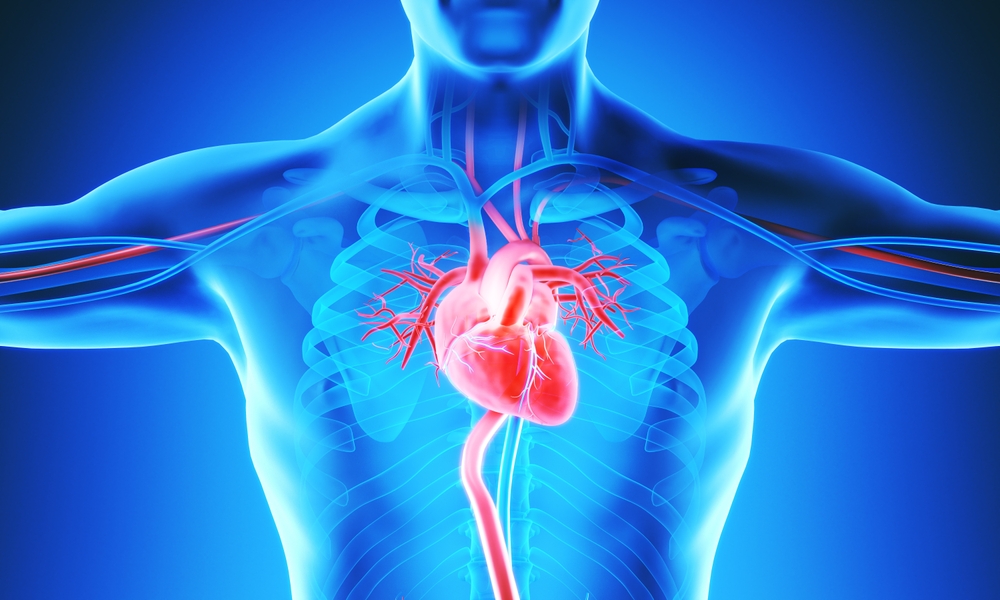
The heart is a muscle that works continuously to pump blood around your body. With each heartbeat, the heart muscle contracts and relaxes, pumping oxygen-rich blood to your organs and tissues and sending oxygen-poor blood to your lungs to collect more oxygen.
The heart has four chambers: two upper chambers (atria) and two lower chambers (ventricles). The right-side pumps blood to the lungs to collect oxygen, while the left side pumps oxygen-rich blood to the rest of the body. The heartbeat is controlled by electrical signals that begin in the sinoatrial (SA) node. These signals travel through the atrioventricular (AV) node and into the ventricles, coordinating the contractions that pump blood around your body.
Cardiomyopathies
In cardiomyopathies, the heart muscle can become thicker, weaker, stiffer or stretched, affecting the heart's ability to pump blood effectively.
Some, but not all, cardiomyopathies are inherited. Cardiomyopathy has many possible causes that are not inherited including long term coronary artery disease, high blood pressure, autoimmune diseases, diabetes, thyroid conditions and infections, among others.
| Inherited cardiomyopathies and the main genes tested | ||
| Condition | What happens | Most common genes tested |
| Hypertrophic cardiomyopathy (HCM) | Abnormal thickening of the heart muscle | MYH7, MYBPC3, TNNT2, TNNI3 |
| Dilated cardiomyopathy (DCM) | Enlargement and weakening of the heart muscle | TTN, LMNA, MYH7, FLNC, DSP, RBM20 |
| Arrhythmogenic cardiomyopathy (ACM) | Heart muscle changes that increase the risk of abnormal heart rhythms | PKP2, DSP, DSG2, DSC2, JUP |
| Restrictive cardiomyopathy (RCM) | Stiffening of the heart muscle, making it difficult for the heart to fill with blood | TNNI3, TNNT2, MYH7, FLNC |
| Genetic testing can help identify the cause of cardiomyopathy, guide treatment and monitoring, and help decide whether family members should be offered testing. | ||
Inherited arrhythmia syndromes
Inherited arrhythmia syndromes are genetic conditions that affect the electrical signals controlling your heartbeat. These signals coordinate the contraction and relaxation of the heart muscle, allowing the heart to pump blood around your body.
Changes in certain genes can disrupt these electrical signals, causing the heart to beat too quickly, too slowly or irregularly. Some inherited arrhythmia syndromes occur in people whose hearts are otherwise structurally normal.
They include long QT syndrome (LQTS), Brugada syndrome, CPVT and Short QT syndrome.
Genetic testing examines genes involved in controlling the heart's electrical activity. Many of these genes provide instructions for making proteins called ion channels, which regulate the movement of electrically charged particles, such as sodium, potassium and calcium, into and out of heart muscle cells. For more on how sodium and potassium work together see potassium.
| Inherited arrhythmia syndromes and the main genes tested | ||
| Condition | What happens | Most common genes tested |
| Long QT syndrome (LQTS) | Delayed electrical recovery between heartbeats | KCNQ1, KCNH2, SCN5A |
| Brugada syndrome | Abnormal electrical activity that can cause dangerous heart rhythms | SCN5A |
| Catecholaminergic polymorphic ventricular tachycardia (CPVT) | Dangerous heart rhythms triggered by exercise or emotional stress | RYR2, CASQ2 |
| Short QT syndrome (SQTS) | Unusually rapid electrical recovery between heartbeats | KCNH2, KCNQ1, KCNJ2 |
Genetic testing can help confirm a suspected inherited arrhythmia syndrome, identify relatives at risk and, for some conditions, guide treatment decisions. However, not everyone with an inherited arrhythmia syndrome has an identifiable genetic variant. Importantly, a negative genetic test does not rule out an inherited arrhythmia syndrome. Some people have characteristic signs and symptoms of an inherited condition, even when genetic testing does not identify a disease-causing variant. | ||

Thoracic aortic aneurysm and dissection (TAAD)
TAAD refers to conditions affecting the aorta, the large blood vessel that carries blood from your heart to the rest of your body.
Inherited conditions can weaken the walls of the aorta, increasing the risk of an aortic aneurysm or dissection. An aneurysm occurs when part of the aorta becomes enlarged or bulges outwards because its wall has weakened. A dissection occurs when a tear develops in the inner layer of the aortic wall, allowing blood to flow between its layers.
Inherited forms of TAAD can occur on their own or as part of a genetic condition affecting other parts of the body as well, especially connective tissue. Connective tissue provides strength and support to structures throughout your body, including the walls of your blood vessels.
| Thoracic aortic aneurysm and dissection (TAAD) and the main genes tested | ||
| Condition | What happens | Most common genes tested |
| Heritable thoracic aortic disease (HTAD), including familial TAAD | The wall of the aorta weakens, causing an aneurysm or dissection. Familial TAAD often occurs without other obvious physical abnormalities. | ACTA2, MYH11, MYLK, PRKG1, LOX |
| Marfan syndrome | This affects connective tissue throughout the body. | FBN1 |
| Loeys–Dietz syndrome | This affects connective tissue throughout the body. | TGFBR1, TGFBR2, SMAD3, TGFB2, TGFB3 |
| Vascular Ehlers–Danlos syndrome | This affects connective tissue throughout the body as well as certain organs. | COL3A1 |
Marfan syndrome, Loeys–Dietz syndrome and vascular Ehlers–Danlos syndrome are syndromes, whereas TAAD does not affect other parts of the body. Genetic testing can help identify an inherited cause of aortic disease, guide the frequency of imaging and monitoring, decisions about preventive surgery and identify relatives who need assessment. | ||

What type of test?
Several types of tests can be used to investigate inherited heart conditions:
Having the test
Sample
Blood
Any preparation?
None
Your results
Sometimes a variant is found in a gene that is known to cause the condition and these are called pathogenic or likely pathogenic variants. When there is plenty of evidence for the variant being the cause, it is called pathogenic. When a particular variant is likely to be the cause, but there is slightly less evidence it is called likely pathogenic. Finding such a variant will usually be enough for a diagnosis.Result What this may mean Pathogenic variant or likely pathogenic variant Negative No disease-causing variant has been identified. This does not exclude an inherited heart condition caused by a gene variant that is not covered by the test. Variant of uncertain significance (VUS) Sometimes gene variants are found, but their clinical significance is not known. They are called variants of uncertain significance (VUS). As our knowledge of these gene variants improves over time, it may be possible to reclassify them as benign or pathogenic. Genetic counselling is important because results can have implications for other family members.
More to know?
Congenital heart conditions
Congenital heart conditions develop before birth, while the baby's heart is forming.
Inherited means a condition is passed through a family, while congenital means it is present at birth.
Congenital heart conditions include abnormalities such as holes in the heart, malformed heart valves and abnormal connections between major blood vessels. Some congenital heart conditions are caused by inherited genetic variants or new genetic changes, while others result from a combination of genetic and environmental factors. In many cases, the cause is unknown. The two groups can overlap. Some congenital heart conditions are inherited, but many are not.
Between 20 and 30 per cent of people with congenital heart disease have an identifiable genetic cause, although estimates vary depending on the type of heart abnormality and the population studied. Genetic causes include:
Chromosomal abnormalities are particularly common when a congenital heart condition occurs alongside other developmental or physical abnormalities.
Genetic testing can be useful when a congenital heart abnormality occurs together with developmental delay, physical characteristics, or when several family members have been diagnosed with a particular genetic condition or syndrome.
Other inherited cardiovascular conditions
There are also genetic tests for:
Questions to ask your doctor
The choice of tests your doctor makes will be based on your medical history and symptoms. It is important that you tell them everything you think might help.
You play a central role in making sure your test results are accurate. Do everything you can to make sure the information you provide is correct and follow instructions closely.
Talk to your doctor about any medications you are taking. Find out if you need to fast or stop any particular foods or supplements. These may affect your results. Ask:
More information
Pathology and diagnostic imaging reports can be added to your My Health Record. You and your healthcare provider can now access your results whenever and wherever needed.
Get further trustworthy health information and advice from healthdirect.
What is Pathology Tests Explained?
Pathology Tests Explained (PTEx) is a not-for profit group managed by a consortium of Australasian medical and scientific organisations.
With up-to-date, evidence-based information about pathology tests it is a leading trusted source for consumers.
Information is prepared and reviewed by practising pathologists and scientists and is entirely free of any commercial influence.