
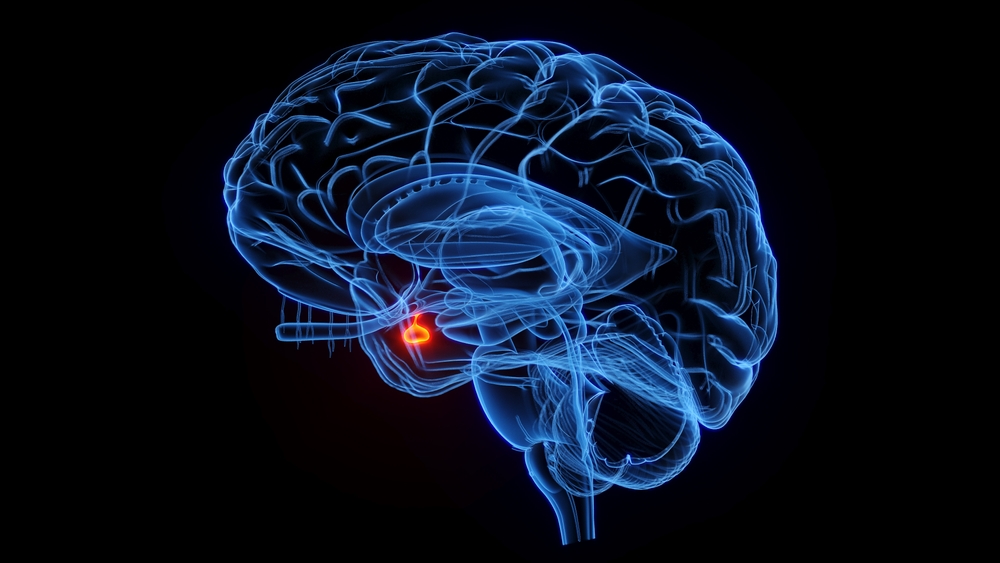
Prolactin is a hormone. These are your body’s chemical messages that are sent out from various glands to affect the way your body works.
Prolactin is one of several hormones made by the pituitary, a gland that sits at the base of your brain just behind your eyes.
Prolactin is best known for stimulating breast milk after childbirth. Normally, there are only small amounts of prolactin circulating in the blood in both women and men. In pregnancy, prolactin levels rise along with oestrogen and progesterone and together they stimulate breast milk development. Following childbirth, a baby’s suckling stimulates the pituitary gland to release prolactin, and this helps manage the breast milk supply. The more often the baby feeds, the more prolactin is released. When breast feeding is stopped, prolactin drops back to low pre-pregnancy levels.
Prolactin affects many different body systems including reproduction, sexual function, metabolism, the immune system and the brain.
It interacts with the hormones that control ovulation, menstrual cycles, testosterone production and sperm production. This is why very high prolactin levels can cause irregular or absent periods, unexpected breast milk production and infertility in women.
In men, higher levels can cause reduced sex drive, erectile dysfunction and infertility. Prolactin levels are often ordered in men as a follow-up if testing shows a low testosterone level.
Apart from pregnancy and breastfeeding, levels of prolactin can rise for several reasons. Some are normal and temporary, while others are related to medical conditions or medications.
Prolactinomas –pituitary gland tumours
Apart from pregnancy, one of the most common causes of raised prolactin levels are a type of pituitary gland tumours called prolactinomas.
The pituitary gland controls production of many important hormones. Most tumours in the pituitary are benign (non-cancerous). Some produce large amounts of one or more hormones, while others cause problems because their size puts pressure on the pituitary gland or nearby structures, such as the nerves involved in vision.
Pituitary tumours are grouped according to which pituitary cells they develop from. The most common type are prolactinomas, which produce too much prolactin and the second most common are somatotroph adenomas which produce too much growth hormone (GH).
In prolactinomas, prolactin levels may be only slightly raised or can be extremely high, depending partly on the size and location of the tumour.
Raised prolactin levels do not necessarily mean someone has a prolactinoma. Other benign pituitary tumours can also cause prolactin to rise indirectly through pressure on the pituitary stalk, which interferes with dopamine signals from the brain that normally keep prolactin production under control.
Disorders affecting dopamine
Prolactin production is normally kept under control by the hypothalamus, a cluster of cells located deep within your brain that is responsible for keeping your body’s nervous and endocrine systems in balance. The hypothalamus is connected to the pituitary gland by a stalk of blood vessels and nerves. This allows the hypothalamus to control when and how much hormone the pituitary releases.
The hypothalamus produces dopamine, which travels to the pituitary gland and acts as a brake on the cells that produce prolactin. If dopamine production is reduced, or its effect on the pituitary is blocked, more prolactin is released into the blood.

Disorders affecting the hypothalamus or the connection between the hypothalamus and pituitary gland can reduce the amount of dopamine reaching the pituitary causing prolactin levels to rise. These include:
trauma, surgery or radiotherapy in the hypothalamic–pituitary region (ie part of the brain where the hypothalamus and pituitary gland are located).
Medications
Higher levels of prolactin can be caused by some antipsychotic medicines, anti-nausea medicines, antidepressants, opioids and, less commonly, certain blood pressure medicines.
Thyroid problems
If your thyroid is underactive, it does not produce enough thyroid hormone. In response, the hypothalamus releases more thyrotropin-releasing hormone (TRH) which stimulates the pituitary gland to produce more thyroid-stimulating hormone (TSH) to try to increase thyroid hormone production. TRH also stimulates the pituitary to release prolactin, so prolactin levels can rise. This is why thyroid function tests (TSH and free T4) are often used when investigating an unexpectedly high prolactin test result.
Pituitary hormone production
Prolactin blood levels may also be measured along with other hormones such as growth hormone (GH), if your doctor suspects that you have more general hypopituitarism (low levels of pituitary function which result in lowered levels of hormones being produced).
Sample
Blood
Any preparation?
None. There are some medications that can increase prolactin levels and affect the accuracy of your test results, so be sure to talk to your doctor about any medications you are taking.
Reading your test report
Your results will be presented along with those of your other tests on the same form. You will see separate columns or lines for each of these tests.
| Prolactin result | What this may mean |
| Normal (within the reference interval) | Indicates normal prolactin production. You may need further tests to investigate your symptoms. |
| Slightly raised | This can be temporary and caused by stress, exercise, sleep or the blood collection itself. It may also occur with medications, hypothyroidism, kidney disease or macroprolactin (see note below). A prolactinoma is possible but other causes are generally considered first. |
| Moderately raised | This could be due to medications, hypothyroidism, kidney disease, interference with dopamine reaching the pituitary or a prolactinoma. The result is interpreted with your symptoms and other findings. |
| High | Makes a prolactinoma or another disorder affecting the hypothalamus/pituitary more likely, particularly once pregnancy, medications, macroprolactin, hypothyroidism and kidney disease have been ruled out. |
| Very high | Strongly suggests significant hyperprolactinaemia and a prolactinoma becomes an important possibility. Prolactin levels tend to increase with prolactinoma size. Prolactinomas are often small but large prolactinomas do occur. Your doctor may request an imaging scan to help locate the tumour and to look at both the size of the tumour and the size of the pituitary (which often enlarges). Prolactinomas are usually treated with medications that act like dopamine. Surgery is sometimes necessary if the prolactinomas are large or not responding to treatment. |
| Low | Levels of prolactin that are below normal are not usually treated but may be indicative of a more general hypopituitarism (decreased pituitary function and decreased hormone production). Low levels may also be caused by some drugs. |
| Note: Some people have a high prolactin due to macroprolactin which is caused by the circulating prolactin being bound to an antibody with little biological activity. Most laboratories can perform a procedure to remove the antibody bound part of prolactin and estimate the true amount of the circulating prolactin. | |
Reference intervals - comparing your results to the healthy population
Your results will be compared to reference intervals (sometimes called a normal range).
If your results are flagged as high or low this does not necessarily mean that anything is wrong. It depends on your personal situation.
Reference intervals for prolactin vary between laboratories in Australia because they use different measurement instruments. Always check your specific laboratory’s ranges.
The choice of tests your doctor makes will be based on your medical history and symptoms. It is important that you tell them everything you think might help.
You play a central role in making sure your test results are accurate. Do everything you can to make sure the information you provide is correct and follow instructions closely.
Talk to your doctor about any medications you are taking. Find out if you need to fast or stop any particular foods or supplements. These may affect your results. Ask:
Pathology and diagnostic imaging reports can be added to your My Health Record. You and your healthcare provider can now access your results whenever and wherever needed.
Get further trustworthy health information and advice from healthdirect.