
BRCA1 and BRCA2 are important genes that repair DNA to stop the cells in our body from growing and dividing out of control – a process that causes cancer. They are called tumour suppressor genes. An alteration, called a pathogenic variant, in either gene can cause our body’s cell repair system to become faulty increasing the chance of cancer forming over time.
Inherited BRCA gene variants (germline)
Everyone has two copies of each of the BRCA genes—one copy inherited from each parent. Cancer-related BRCA gene variants are usually inherited in an autosomal dominant pattern which means you only need one faulty copy of a BRCA gene from either of your parents to have an increased cancer risk. The variant gene can be passed down from the mother or father and both men and women are equally likely to inherit it.
Although someone with a variant is born with a higher risk of cancer, they may never develop cancer and for those who do, cancer may not develop for many years. This is because several steps must happen over time before a normal cell turns into a cancer cell. For instance, if someone inherits a BRCA variant on one of the two gene copies, the other still works. This working copy of the gene can still repair DNA for many years. For cancer to develop, the working BRCA copy in a cell must also become damaged.
Even after both copies in a cell are damaged, cancer does not appear instantly. It develops only after cells acquire several more alterations in other genes that regulate growth. This happens slowly over many years or even decades.
BRCA stands for BReast CAncer gene but having an inherited variant in these genes increases the risk of developing several types of cancers, most notably:
Acquired BRCA gene variants (somatic)
Sometimes, BRCA gene alterations or variants can occur during the normal course of life. A working gene copy can change or be lost. Such a change is called a somatic alteration. These changes are not inherited - you were not born with them, and you cannot pass them on to your children.
Only cancer cells carry these BRCA somatic alterations. They do not increase your risk of cancer other than the cancer you already have. These acquired BRCA alterations occur in a range of cancers—not just the classic hereditary ones. See here for more on somatic tumour testing.
How do genetic alterations (variants) cause cancer?
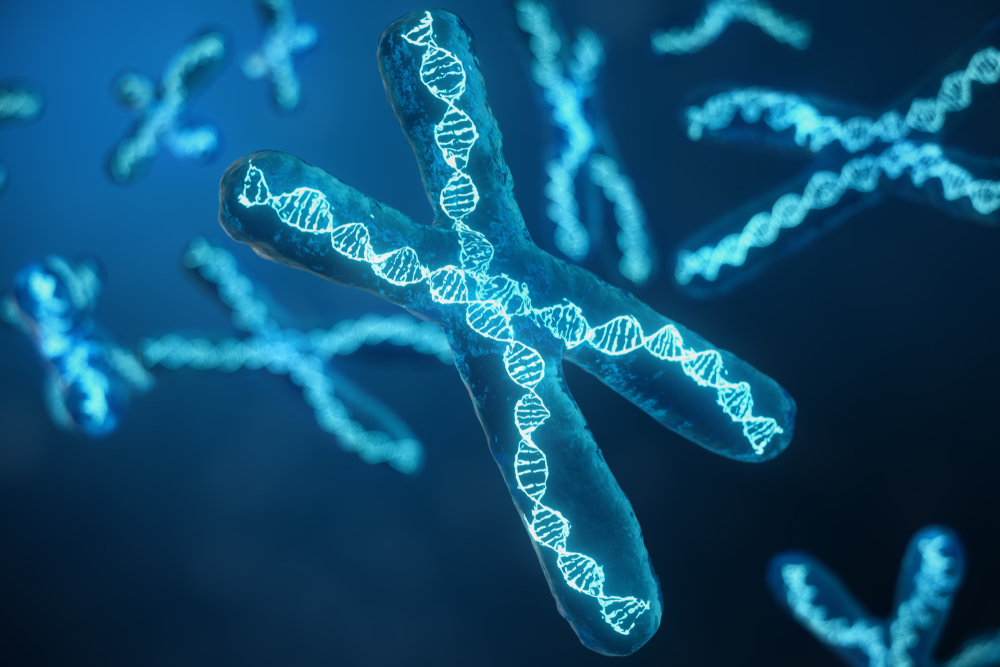
Our bodies are made up of trillions of cells. Almost every cell has a nucleus containing a complete set of our genetic material - our DNA. DNA is made of two matching strands twisted together like a spiral staircase, forming a double helix. This is tightly wound into structures called chromosomes. We have two sets of chromosomes, one inherited from our mother and one from our father.

Genes are short sections of DNA. Genes tell the body how to grow, work, and react to its surroundings. Genes do this by giving instructions to make proteins. Proteins are the molecules that do the work in cells.
Our cells have a lifespan – they get old and die off. Some cells last only a few hours or days, yet others last for months or years or even a lifetime. The cells in our body continuously divide to grow. Each time a cell divides, it copies its DNA and sometimes, small copying mistakes can occur. The alterations are also called variants.
Most alterations are harmless, and some are repaired automatically by our cells but as we age our DNA repair mechanisms weaken. This means that some abnormal cells survive and multiply.
When DNA is damaged, it can change the instructions. Cancer forms when accumulated DNA damage disables the mechanisms that normally control cell growth, repair, and death, allowing cells to grow and spread uncontrollably.
How are BRCA1 and BRCA2 genes involved in cancer?
BRCA 1 and 2 make proteins that repair double strand breaks in DNA. This is when both strands of the DNA ladder are cut.
Some double-strand DNA breaks occur accidentally when cells are copying themselves. Environmental factors such as exposure to ionising radiation, certain chemicals, and some medications can also lead to double-strand DNA breaks.
Other double-strand DNA breaks are deliberately made by cells when genes are being rearranged to allow for essential processes.
For example, it happens when genes are mixed during the formation of eggs and sperm. It also happens when immune cells deliberately break and rejoin their DNA to create many different receptors, allowing the body to recognise a wide range of infections. These DNA breaks are carefully controlled and quickly repaired after rearrangement.
Cells must repair DNA breaks quickly to prevent alterations. BRCA1 and BRCA2 are genes that help repair these breaks. If the BRCA genes do not work properly, double-strand breaks are poorly repaired, and this increases cancer risk.
To perform this repair, cells use homologous recombination, a highly accurate process that uses the matching chromosome as a template. Because we inherit two copies of each chromosome—one from each parent—there is usually a working copy available to guide the repair.


Why are only certain cancers linked to BRCA1 and BRCA2?
BRCA1 and BRCA2 genes are present in all cells but some cell types are more susceptible to developing cancer than others,.
Cancers caused by faulty BRCA genes show up mostly in tissues like breast, ovary, prostate, and pancreas. Other cancers associated with faulty BRCA genes include melanoma, fallopian tube, endometrial, peritoneal, gastric and brain cancers but these are less commonly caused by BRCA gene faults.
BRCA testing is not offered for all breast cancers. It is usually targeted at certain types that are known to be associated with a BRCA variant or in certain clinical situations: BRCA1 and 2 testing is offered when prostate cancer is advanced or BRCA testing can help guide treatment beyond standard hormone therapy. It can show if certain targeted drugs like PARP inhibitors can be used in treatment. All people diagnosed with pancreatic cancer are offered BRCA testing BRCA testing can help guide treatment and show if certain treatments such as platinum-based chemotherapy and PARP inhibitors can be used.Cancer type BRCA1 and BRCA2 testing Ovarian cancer BRCA variants are linked to about 10-15% of all ovarian cancers – they are more strongly linked to ovarian cancer than breast cancer. Testing is offered to most people diagnosed with high grade ovarian cancer regardless of age or family history. Testing may help show if certain drugs, like PARP inhibitors, can be used in treatment. Breast cancer
Prostate cancer
has spread (metastatic), a strong family history of prostate, breast, and ovarian cancer or a known familial BRCA variant. BRCA 2 variants are associated with more aggressive forms of prostate cancer.Pancreatic cancer
About 5–10% of familial pancreatic cancer cases have an inherited variant in BRCA1, BRCA2, or related genes.
Testing strategy
Testing for BRCA1 and BRCA2 gene mutations can be done in several different ways, including somatic tumour testing and germline testing.
Somatic testing is performed on tumour tissue. Somatic mutations are changes to genes that develop during a person’s lifetime. They are not inherited and not passed on to children. They are found only in the cancer cells. This type of testing is usually performed to help guide treatment decision, such as to see if you will benefit from PARP inhibitor treatment.
Germline testing can be performed when there is a known inherited variant (see section below) or when your doctor thinks that there is a chance that you might have a germline variant based on your age, tumour type and/or family history. This type of testing is typically performed on a blood sample.
Germline testing can be performed on only BRCA1 and BRCA2 or may include other genes if it is requested as part of a multigene panel. You can discuss with your doctor whether targeted BRCA1 and BRCA2 testing or a gene panel approach is best for you. Depending on your history, testing for either option may be Medicare funded if requested by a specialist.
Family testing for BRCA 1 and BRCA2 genetic variants
If a BRCA1 or BRCA2 genetic variant has been identified in a family member, other family members can be offered testing to assess their personal cancer risk. This is known as predictive (or pre-symptomatic) testing and is only offered through a family cancer clinic.
Predictive testing helps people understand their personal cancer risk and consider their options to reduce the risk of developing breast or ovarian cancer in the future. If a particular variant has been found in a family member, you will be offered testing only for that known gene variant.
The presence of a genetic fault in BRCA1 or BRCA2 means that the person tested is at an increased risk for certain cancers, but even within a family with the same BRCA variant, not everyone will develop cancer and those who do may develop it at different times during their life.
Specific BRCA1 and BRCA2 variants are associated with some ethnic groups, such as people of Ashkenazi Jewish descent, in which three BRCA variants are much more common than in other ethnic groups.
Someone who is considering testing should talk to their doctors and seek genetic counselling before and after testing.
BRCA 1 and 2 testing has a Medicare rebate which, subject to conditions set by the MBS being met, may cover the cost of testing.
It is important to note that Medicare requires a referral from an appropriate specialist, as all relevant MBS items specify that the test must be requested by a specialist.
Blood (for germline testing)
A sample of the tumour (for somatic tumour testing)
Any preparation?
None
A positive test result means a genetic variant has been identified in the genes tested. The variants identified may be called pathogenic or disease-causing variants. The variants of strong or potential clinical significance are highlighted, and the results will help your doctors select the most appropriate treatment for the variants identified.
Genetic testing reports are highly complex. They typically present the most important and relevant information first followed by supplementary information.
| Result | What this may mean |
| Pathogenic / likely pathogenic variant detected | A BRCA variant has been confirmed The degree of risk conferred with a positive result depends on many variables. A genetic counsellor or familial cancer specialist will explain the meaning of the results, the personal risk estimates, explain treatment options and testing options for family members. The presence of a genetic fault (pathogenic variant) in BRCA1 or BRCA2 means you are at increased risk for cancer, but it does not mean that you will definitely develop cancer. Even within a family with the same BRCA variant, not everyone will develop cancer and those who do may develop it at different times during their life. |
| No reportable variant detected (negative result) | No BRCA variant has been found. A negative result does not mean you will not develop cancer. It means no BRCA variant was detected using current methods. However, cancer can still occur for other reasons, and your overall risk will depend on factors such as age, lifestyle, and family history. A genetic counsellor or specialist can help interpret a negative result in the context of your personal and family history. Genetic testing of BRCA1 and BRCA2 cannot detect 100% of pathogenic variants in these genes, so, even with a negative result there is a very small chance that there is a BRCA1 or BRCA2 variant present that was not identified by the testing methods that was used. |
| Variant of Uncertain Significance (VUS) | A change in a BRCA gene has been found but its effect is unknown. This may be because the variant is rare and there is not enough information available on which to make a decision. |