
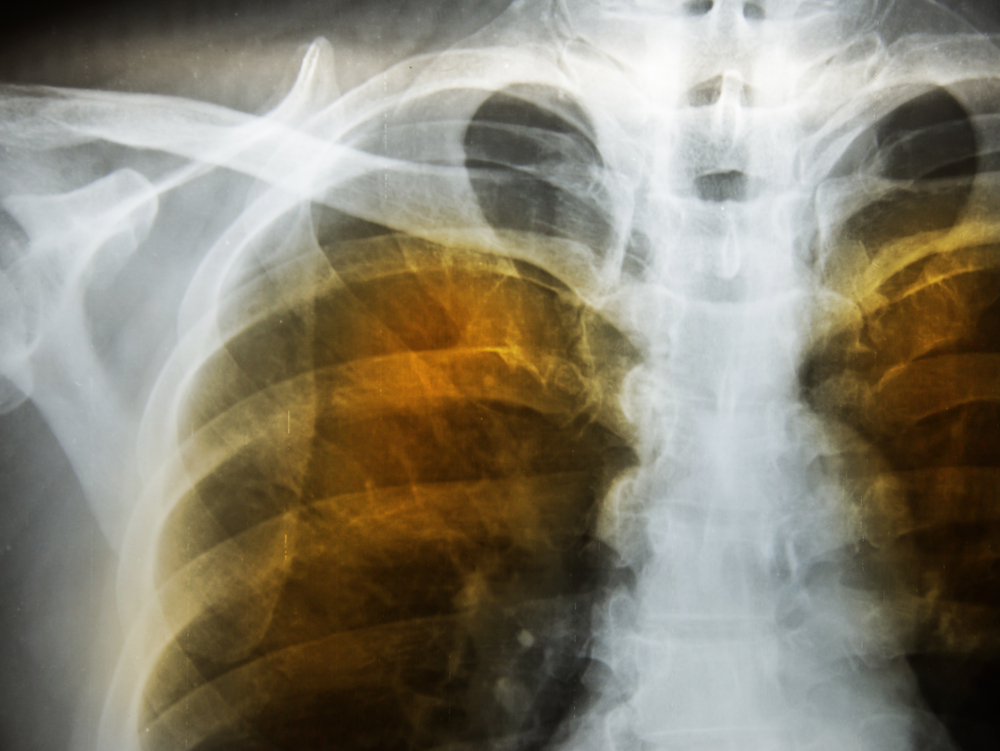
Alpha-1 antitrypsin deficiency is an inherited genetic condition. If you have this condition, your body has a problem making a protein called alpha-1 antitrypsin (A1AT). You make too little A1AT or a type of A1AT that does not function properly.
An A1AT blood test measures the amount of the protein in your blood. Your doctor may request it if you have unexplained or early-onset emphysema or Chronic obstructive pulmonary disease (COPD), unexplained liver disease, or if people in your family have already been diagnosed with A1AT deficiency.
Normally, A1AT is made in your liver and helps protect your lungs from damage caused by inflammation. When your lungs become inflamed, such as during an infection or after exposure to irritants like occupational dust or fumes or cigarette smoke, your immune system releases enzymes that help break down and remove damaged tissue. One of these enzymes is called neutrophil elastase.
Neutrophil elastase is an important part of the body’s defence system, but if its activity is not controlled it can damage healthy lung tissue. A1AT acts as a protective shield by blocking excess neutrophil elastase and limiting this damage.
If you have A1AT deficiency, there may not be enough A1AT circulating in your blood to adequately protect your lungs or you may be making A1AT that is not working properly and builds up in your liver leading to damage.
Alpha-1 antitrypsin deficiency can cause problems in two main places:
A1AT deficiency is thought to be one of the most common inherited genetic conditions in people of European ancestry. In Australia, about 1 in 2,500 people are estimated to have a significant A1AT deficiency. Lung Foundation Australia estimates that about 30,000 people in Australia and New Zealand may be affected, although many people may be unaware that they have the condition.

A1AT deficiency is an inherited condition caused by a genetic change (variant) that is passed on from parent to child.
Genes are the instructions that tell our body how to function. They are contained within our DNA. We get half our genes from our mother and half from our father, and this genetic makeup does not change throughout our life. If you inherit an altered copy (variant) of a gene it may mean that the gene doesn’t work as it should or doesn’t work at all.
The gene that controls production of A1AT is the SERPINA1 gene also known as the protease inhibitor (Pi) gene. Everyone has two copies of the SERPINA1 gene —one copy inherited from each parent.
A1AT deficiency is inherited in an autosomal codominant pattern which means both gene copies contribute to the amount and type of protein your body makes. If there is a change or variant in one or both of the gene copies, not enough A1AT is made and/or the A1AT that is made does not work properly.
A variant in the SERPINA1 gene is a difference or change in the DNA instructions used to make A1AT. The type of health problems this causes depends on the variant inherited. Although, more than 200 SERPINA1 variants have been identified, only a few of these (M, S, Z) are common.
Because a person inherits two copies, they can have different combinations, such as MM, MS, MZ, SS, SZ or ZZ. These combinations influence how much functioning A1AT reaches the blood and therefore the level of risk of lung and, for some variants, liver disease.
An important distinction is that the Z variant doesn't simply stop A1AT being made. It causes an abnormal protein to be made. Much of the abnormal protein becomes trapped in the liver. This means too little reaches the lungs, while the build-up in the liver can cause liver damage.
| Genetic combinations | Outcomes |
| Two copies of M | This produces normal amounts of A1AT |
| One copy of M and one of S or Z (MS or MZ) | This variant combination will produce reduced amounts of A1AT but those who have it should have enough to protect themselves. Some MZ carriers have a slight increase in liver disease risk even without smoking if their MZ status is combined with obesity/fatty liver disease, alcohol use, or viral hepatitis. MZ carriers may pass on the Z variant to their children. |
| Two copies of S (SS) | Someone with SS may have no symptoms or be moderately affected. They produce about 60% of the required A1AT. |
| One copy of S and one of Z (SZ) | A person with SZ is at an increased risk of developing emphysema. They produce only about 40% of normal A1AT. The risk of liver cirrhosis is increased compared with non-A1AT individuals. |
| Two copies of Z (ZZ) | A person with ZZ will be the most severely affected. They produce only about 10% of the required A1AT. |
| Rare variants | There are some very rare variant forms that do not produce any A1AT at all. The risk of lung disease is extremely high, but liver disease risk is not increased because no abnormal protein builds up in the liver. |
Several tests can be used to investigate alpha-1 antitrypsin (A1AT) deficiency. They can measure how much A1AT is in your blood, identify the different forms of A1AT protein you produce, or to look for variants in the SERPINA1 (Pi) gene.
Sample
Blood
Any preparation?
None
Reading your test report
Your results will be presented along with those of your other tests on the same form. You will see separate columns or lines for each of these tests.
If an A1AT blood test shows that your A1AT level is below the protective threshold of 0.57 g/L, you have A1AT deficiency.
The effects of A1AT deficiency vary considerably from person to person. Even people with the same gene variants can have very different levels of lung or liver disease. Other factors, particularly smoking, can greatly increase the risk of lung damage.
One important limitation of the A1AT blood test is that A1AT is an acute-phase protein, meaning its level can rise during infection or inflammation. This can sometimes make a person's A1AT level appear normal even when they have an inherited deficiency.
A1AT can be elevated in acute and chronic inflammatory conditions, infections and with some cancers. Increased levels of A1AT may also be seen in pregnancy, stress and thyroiditis, and in patients taking oral contraceptives. This may cause levels to appear normal in someone with mild to moderate A1AT deficiency when they also have another condition that increases A1AT. If there is a high clinical suspicion of A1AT deficiency, genetic testing will be performed, regardless of the A1AT level.
Reference intervals - comparing your results to the healthy population
Your results will be compared to reference intervals (sometimes called a normal range).
Reference intervals for A1AT vary between laboratories in Australia because they use different measurement instruments. Always check your specific laboratory’s ranges.
The choice of tests your doctor makes will be based on your medical history and symptoms. It is important that you tell them everything you think might help.
You play a central role in making sure your test results are accurate. Do everything you can to make sure the information you provide is correct and follow instructions closely.
Talk to your doctor about any medications you are taking. Find out if you need to fast or stop any particular foods or supplements. These may affect your results. Ask:
Pathology and diagnostic imaging reports can be added to your My Health Record. You and your healthcare provider can now access your results whenever and wherever needed.
Get further trustworthy health information and advice from healthdirect.