
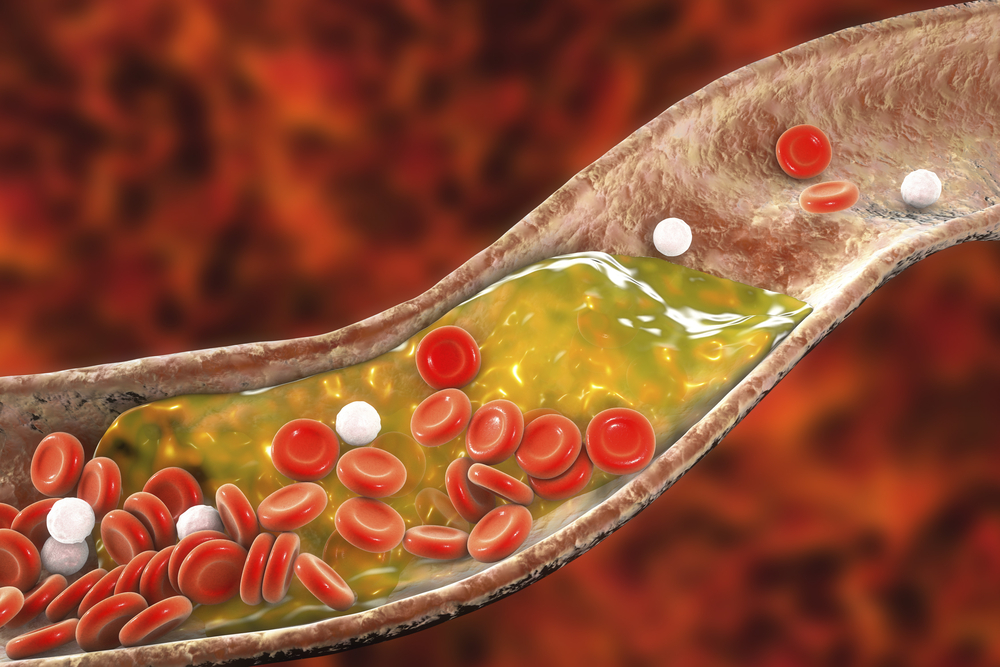
Apolipoprotein E (ApoE) is a protein that helps transport fats, including cholesterol, through the bloodstream. It attaches to receptors on the surface of cells, allowing fats to enter the cells where they can be used or stored. ApoE also helps carry excess fats to the liver, where they can be processed and removed from the body.
What is the APOE gene?
The APOE gene gives the instructions for making the ApoE protein. There are three main forms of the APOE gene. These are known as alleles:
Everyone has two copies of each of their genes—one copy inherited from each parent.
In the case of APOE genes, we inherit one from each parent in some combination of these three forms. For example, this could be ε2/ε2, ε2/ε3, ε3/ε3 or ε3/ε4.
Large-scale studies have shown that the effects of APOE variants vary considerably between populations, including among different racial and ethnic groups.

APOE genotype testing looks at your DNA to identify which combination of APOE gene types you have inherited. Testing plays different roles in investigating CVD and Alzheimer’s disease.
Cardiovascular disease risk
In CVD, APOE affects how cholesterol and other fats are transported and cleared from the blood. For more on cholesterol see Lipid profile.
The APOE ε4 variant tends to be associated with higher LDL-cholesterol known as bad cholesterol and a modestly increased risk of CVD, while ε2 is generally associated with lower LDL cholesterol and a lower risk of CVD.
However, APOE genotyping is not routinely used to assess your CVD risk, because standard measurements such as cholesterol, blood pressure, diabetes and smoking history give more useful information for making treatment decisions.
APOE genotype testing is sometimes used when high cholesterol and triglycerides suggest an inherited lipid disorder. One of its main uses is to help diagnose familial dysbetalipoproteinaemia (type III hyperlipoproteinaemia).
The condition is strongly associated with the APOE ε2/ε2 genotype. The ApoE2 protein is less effective at clearing certain fat-rich particles from the blood, allowing them to build up. However, most people with ε2/ε2 do not develop the condition, as other genetic, metabolic or lifestyle factors are usually involved.
Alzheimer’s disease risk
The APOE gene helps control how fats and cholesterol are transported and used in the brain. Brain cells need cholesterol to build and repair their cell membranes and to function normally.
The links between the APOE gene and Alzheimer’s disease remain unclear and are the subject of research. Recent work suggests that the APOE gene can affect several processes involved in Alzheimer’s disease. These include the build-up of amyloid plaques and tau proteins, damage to brain cells, inflammation in the brain, and the function of the blood-brain barrier.
Carrying the APOE ε4 form of the gene is the strongest common genetic risk factor for late onset Alzheimer’s disease (when it develops after the age of 65). Having at least one copy of APOE-ε4 increases your risk and having two copies increases it further.
However, this does not mean you will definitely develop it. Many people who carry APOE ε4 never develop Alzheimer’s disease, while many people who develop Alzheimer’s disease do not carry APOE ε4. The level of risk varies between people. Factors such as age, sex and ancestry can influence the effect of APOE ε4. This means that gene testing cannot be used to predict your individual risk.
The APOE ε2 variant is associated with a lower risk of Alzheimer’s disease and, in people who develop the disease, a later age of onset compared with APOE ε4.
Because of its limitations, APOE gene testing has had a limited role in diagnosing Alzheimer’s disease or predicting the risk of developing it. Biomarkers are more useful for diagnosis. Tests such as p-tau217, amyloid PET and CSF amyloid/tau provide evidence of the underlying Alzheimer’s disease process, while APOE testing does not. For more information, see p-Tau217.
Treatment with anti-amyloid immunotherapies
Although APOE gene testing is not generally used in diagnosis, there is one important use of APOE testing and this is before treatment with anti-amyloid drugs. People carrying APOE ε4, particularly those with two copies, have a higher risk of ARIA (amyloid-related imaging abnormalities) during treatment. ARIA can cause swelling or small areas of bleeding in the brain. Knowing your APOE status does not determine whether treatment will work, but helps assess the likelihood of ARIA.
Other genes tested for Alzheimer’s disease
Rare forms of Alzheimer’s disease can be caused by variants in other genes especially APP, PSEN1 and PSEN2.
However, variants in PSEN1, PSEN2 and APP account for only a small proportion of Alzheimer’s disease. They are usually associated with early-onset disease and a strong family history across several generations. Genetic counselling is recommended before considering testing.
Many other genes, including TREM2, SORL1, ABCA7, BIN1, CLU, CR1 and PICALM, have been linked to Alzheimer’s disease, but they are not routinely tested to predict your risk because their effects are complex and results cannot reliably predict whether you will develop the disease.
Sample
Blood
Any preparation?
None
Your APOE result can provide information about your inherited risk of developing CVD or Alzheimer’s disease, but it cannot predict whether you will develop these conditions. The result of your genetic test needs to be considered together with other risk factors, symptoms and test results.
Genetic counselling
Genetic counselling is essential when considering APOE testing, particularly in relation to Alzheimer’s disease. Results can have implications for relatives and can cause unnecessary concern. Finding an ε4 version in someone without symptoms can create anxiety even though it does not mean they will develop Alzheimer’s disease.
A genetic counsellor can explain what the test can and cannot tell you, the possible meaning of your results, and the implications for you and your family. This can help you make an informed decision about whether to have the test and understand the results when they are available.
| Your APOE results | ||
| APOE result | Cardiovascular disease risk | Alzheimer’s disease risk |
| ε2/ε2 | Often associated with lower LDL cholesterol, but a small proportion of people can develop very high triglycerides and remnant cholesterol (type III hyperlipoproteinaemia) | Generally associated with a lower risk of Alzheimer’s disease. |
| ε2/ε3 | Usually neutral or associated with somewhat lower LDL cholesterol | Generally associated with a lower risk of Alzheimer’s disease. |
| ε3/ε3 | Considered the usual or reference genotype | Considered the average/reference risk of Alzheimer’s disease. |
| ε2/ε4 | ε4 can contribute to higher LDL cholesterol; ε2 can have the opposite effect | Contains one ε4 allele, so AD risk is increased, although ε2 may modify this risk of Alzheimer’s disease |
| ε3/ε4 | Associated on average with higher LDL cholesterol and a modest increase in CVD risk | Increased risk of Alzheimer’s disease compared with ε3/ε3 |
| ε4/ε4 | More strongly associated with higher LDL cholesterol and increased CVD risk | Highest Alzheimer’s disease risk of the common APOE genotypes |
CVD: your APOE gene type is only one influence on cholesterol and CVD risk. LDL cholesterol, and triglyceride levels, blood pressure, smoking, diabetes, age and other risk factors are much more important. APOE genotyping is not routinely needed for CVD risk assessment. Alzheimer’s disease: other tests are used for diagnosis. Tests such as p-tau217, amyloid PET and CSF amyloid/tau provide evidence of the underlying Alzheimer’s disease process. APOE testing cannot diagnose Alzheimer’s disease, determine age of onset, or predict whether symptoms will develop. | ||
The choice of tests your doctor makes will be based on your medical history and symptoms. It is important that you tell them everything you think might help.
You play a central role in making sure your test results are accurate. Do everything you can to make sure the information you provide is correct and follow instructions closely.
Talk to your doctor about any medications you are taking. Find out if you need to fast or stop any particular foods or supplements. These may affect your results. Ask:
Pathology and diagnostic imaging reports can be added to your My Health Record. You and your healthcare provider can now access your results whenever and wherever needed.
Get further trustworthy health information and advice from Healthdirect.
Healthdirect Australia: Alzheimer's disease